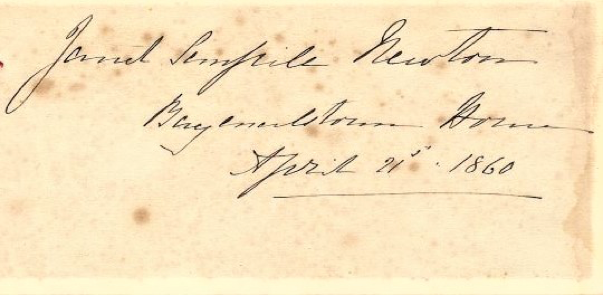
3. Janet Sempill Newton,
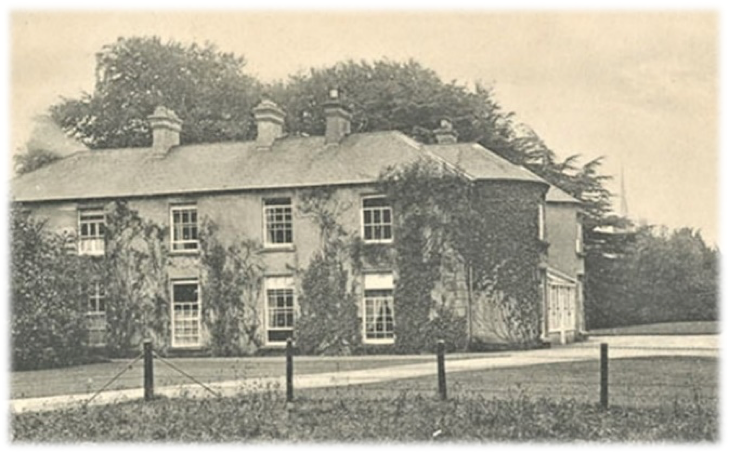
Bagenalstown House, Co. Carlow
|
Janet Sempill Forbes was the daughter of Alexander Forbes (1788-1843) and Janet Forbes (1781-1846) of Aberdeen, Scotland. She married twice. Her first husband was John Newton, son of Col. Philip Newton and Sarah Westrop; they were married on July 2nd,1850 at Culsamond, Aberdeenshire, Scotland. They lived in Bagenalstown House, in Carlow where John Newton held the office of High Sherriff of County Carlow in 1856 until his death on October 22nd, 1959. From her research on music in the big houses of Ireland, Dr. Karol Mullaney-Dignam found it was quite common for the ladies to have control of the music manuscripts and music played at various events held at these large homes in the 18th & 19th centuries.
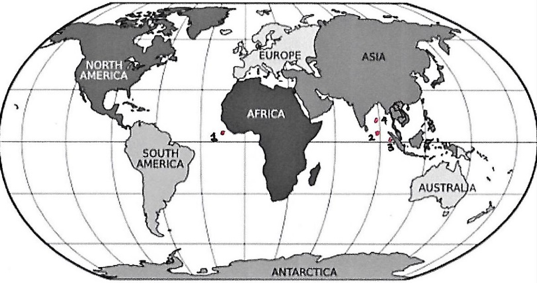
On Nov. 10th, 1863, Janet married Dr. James Thomas Rawson in Dublin and they lived in Barrowville House, No.1 Kilkenny Road, Carlow. This was Dr. Rawson’s 3rd marriage and he lived in Barrowville since 1840 or 1841 after graduating from University of Galsgow. His consultancy offices were on Dublin Street in Carlow and he was known as a caring physician who also took care of the poor in the infirmary and the prisoners in the local Carlow prison. There are 150 pages of transcribed music in this manuscript with entries at two different periods. The first half of the manuscript was transcribed during and probably before 1849. Four entries were completed while on board the “Prince of Wales”, with very specific dates and co-ordinates of the ship’s location on each of the four occasions. These were: |
|
- Lat: 2.35N 2. Lat:3.45N 3. Lat: 2.31N 4. Lat: 12.56N
Distance: 92 miles Distance: 48miles Distance: 41 miles Distance: 190 miles
Date: Sept. 24th, 1849 Date: Nov. 16th, 1849 Date: Nov.24th, 1849 Date: Nov. 28th, 1849
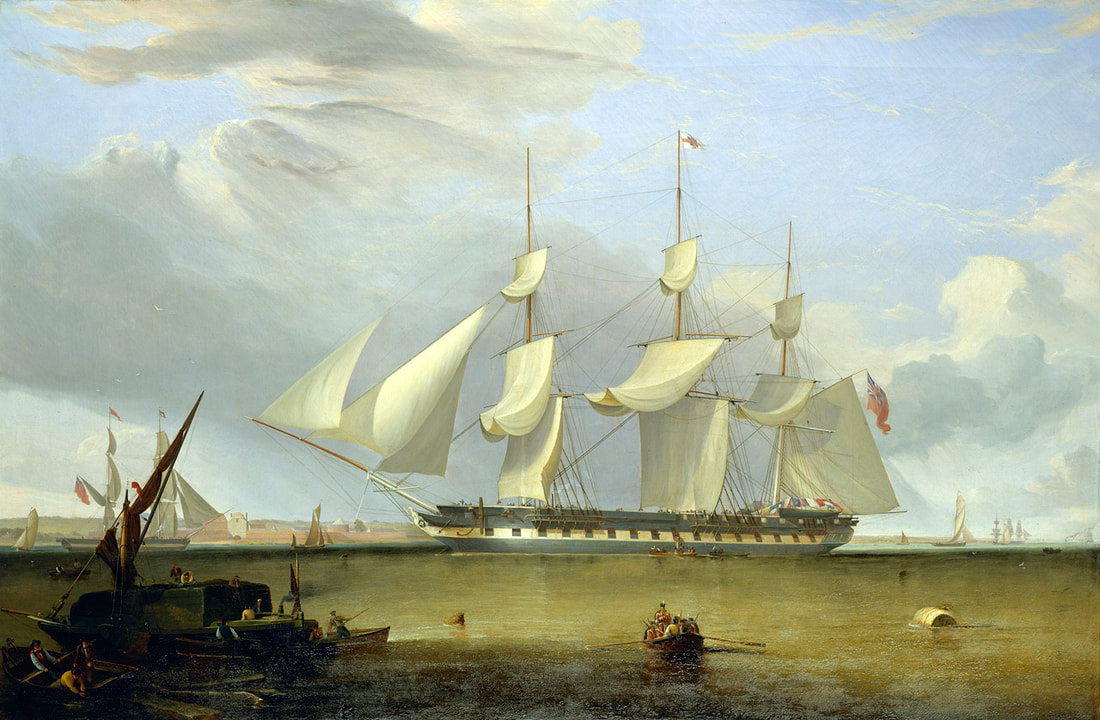
The Prince of Wales was a large vessel specially fitted-out for the conveyance of the East India Company's troops to the East. She was built by Green's of Blackwall in 1842 to a design known as that of the "Blackwall Frigates" - Indiamen with the single-decked appearance of frigates. Presumably Janet travelled on this journey to the East with her husband-to-be, John Newton.
There are no dated entries in the manuscript during Janet’s marriage to John Newton (1850-1859), however, two years after his death, the next dated entry appears, dated Dec. 17th, 1861 and a second on Jan. 8th, 1862. Following Janet’s marriage to Dr. Rawson in 1863 and her move to her new residence at Barrowville, Carlow, the following dated entries can be found:
March 29th, 1864 JSR
Oct. 25th, 1865 JSR
Oct. 26th, 1865 JSR
Barrowville, Nov. 6th, 1865 JSR
Barrowville, Jan. 30th, 1868
JSR Feb. 1st, 1868
JSR Feb. 4th, 1868
Barrowville JSR Dec. 30th, 1869
Janet’s husband, Dr. Thomas Rawsom, died on Oct. 12th, 1881 at Barrowville.
The final dated entry, at bottom of the transcribed tune: “Happiness & Joy,” reads:
“Copied from M F(?) Angus
September 4th, 1892
JSR”
Janet Sempill Rawson died on March 14th, 1894 at Barrowville.
Although the entries were transcribed in many hands over the years, it is clear from her handwriting that the manuscript was the property of Janet Sempill Forbes before her first marriage in 1850 and remained so throughout her life.
There are no dated entries in the manuscript during Janet’s marriage to John Newton (1850-1859), however, two years after his death, the next dated entry appears, dated Dec. 17th, 1861 and a second on Jan. 8th, 1862. Following Janet’s marriage to Dr. Rawson in 1863 and her move to her new residence at Barrowville, Carlow, the following dated entries can be found:
March 29th, 1864 JSR
Oct. 25th, 1865 JSR
Oct. 26th, 1865 JSR
Barrowville, Nov. 6th, 1865 JSR
Barrowville, Jan. 30th, 1868
JSR Feb. 1st, 1868
JSR Feb. 4th, 1868
Barrowville JSR Dec. 30th, 1869
Janet’s husband, Dr. Thomas Rawsom, died on Oct. 12th, 1881 at Barrowville.
The final dated entry, at bottom of the transcribed tune: “Happiness & Joy,” reads:
“Copied from M F(?) Angus
September 4th, 1892
JSR”
Janet Sempill Rawson died on March 14th, 1894 at Barrowville.
Although the entries were transcribed in many hands over the years, it is clear from her handwriting that the manuscript was the property of Janet Sempill Forbes before her first marriage in 1850 and remained so throughout her life.
|
|
|